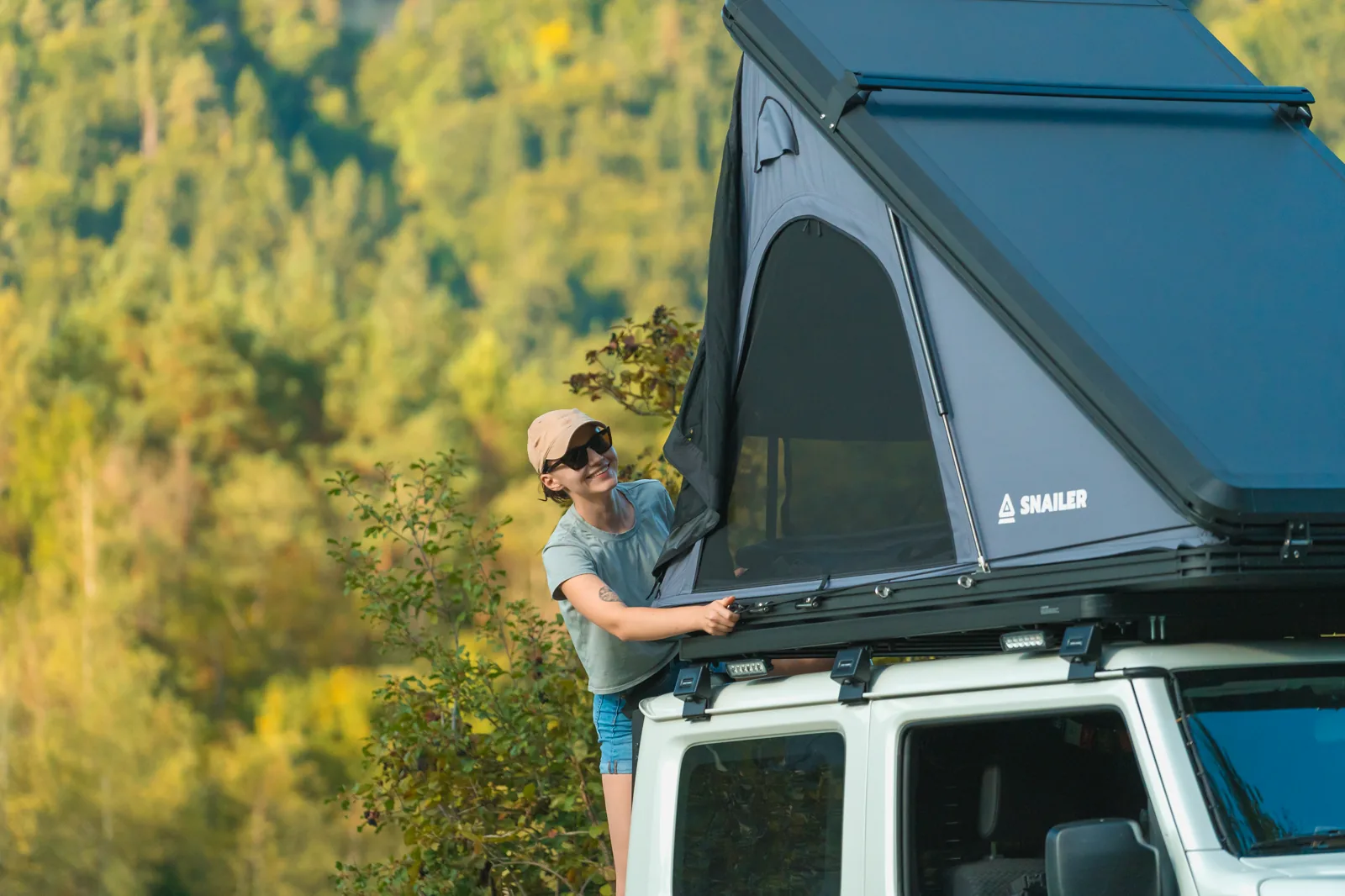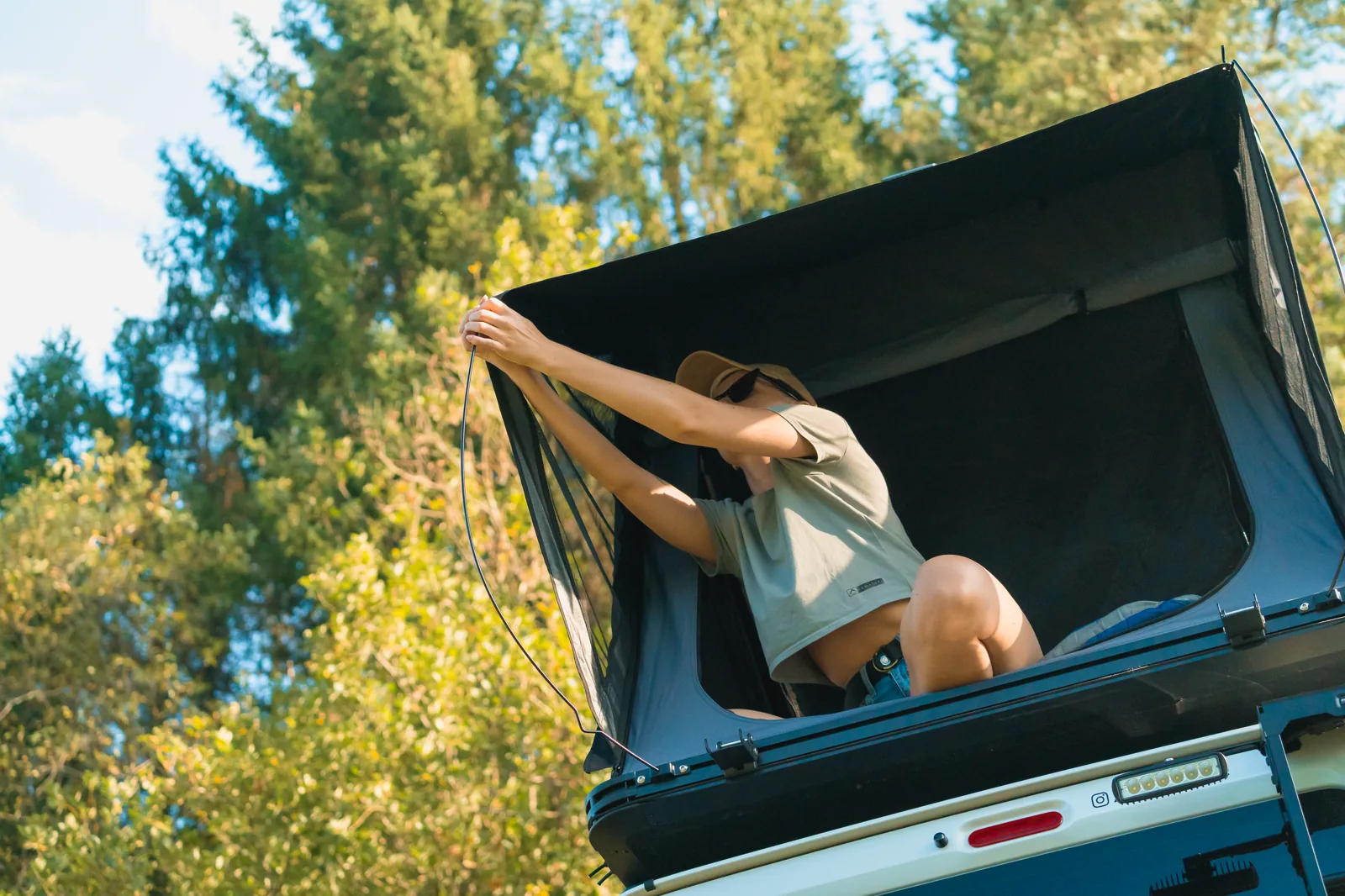

A quality rooftop tent such as the SNAILER Alduo gives you freedom and comfort on the road. To keep it in top condition for years, it needs the right off-season care. During winter, the biggest enemy is not frost but trapped moisture and the mold that comes with it.
This guide explains why winter storage matters, how to prevent mold, and what to do if you open the tent in spring and find an unpleasant surprise inside.
Why does mold form inside a rooftop tent?
Modern hard-shell rooftop tents offer excellent insulation, but that same tight construction can work against you in winter. Even when a tent feels dry, residual moisture may still remain inside after your last trip. During long periods of non-use, that moisture has nowhere to escape.
A closed environment without airflow creates ideal conditions for mold, especially on fabrics, seams, and the mattress. Mold is not only a cosmetic problem or a source of odor. It can permanently damage the tent fabric and affect your health as well.
- Residual moisture: packing the tent after morning dew or light rain is enough if it was not dried properly.
- Condensation: temperature swings create moisture on the walls and under the mattress.
- Poor ventilation: inside a closed tent, moisture stays trapped and slowly creates the right environment for microorganisms.

Winter storage off the vehicle: the most important tips
If you plan to put your rooftop tent away for winter, follow these proven steps from the SNAILER manual:
- Clean and dry it thoroughly: remove dust and pollen before storage and leave the tent fully open for at least 24 hours in a dry place.
- Take the mattress out: store it separately indoors in a dry space. This improves airflow in the lower part of the tent.
- A dry indoor space is ideal: a garage, warehouse, or hall is a much better choice than a damp shelter. If possible, leave the tent slightly open.
- Side storage is possible: if you need to save space, a tent like the SNAILER Alduo can also be stored on its side, as long as it rests on a flat surface with a soft base.
What if the rooftop tent has to stay on the vehicle?
If the tent remains mounted on the car throughout winter, regular ventilation and moisture control become even more important.
- Regular airing out: open the tent at least once every two weeks during a dry day and let it ventilate properly.
- Moisture absorbers: place silica gel bags or special moisture-absorbing cushions inside the tent to catch small amounts of humidity created by temperature changes.
How to prevent mold and what to do if it appears
Prevention is always easier and cheaper than repair. Still, if you open the tent in spring and find mold inside, there is no reason to panic. The important thing is to act quickly.
Steps to remove mold
- Dry the tent completely: open it in fresh air, in the sun, or in a well-ventilated space.
- Clean it mechanically: remove the mold gently with a soft brush or sponge. Avoid rough tools that could damage the protective finish.
- Use a natural or dedicated solution:
- Vinegar and water 1:1: a simple and effective option. Wipe the fabric with clean water afterwards.
- Specialized cleaners: use products made specifically for outdoor fabrics and tents.
- Avoid harsh methods: do not use bleach, a pressure washer, or a washing machine. They can destroy the material and its protective layers.
Do not forget the small maintenance details
Before winter, it also helps to lubricate locks and hinges with a silicone spray. This reduces the risk of oxidation and sticking after a long break. If you cleaned the tent more intensively, renew the fabric impregnation after it has dried fully so the water resistance stays where it should be.
Summary
Proper winter storage extends the life of a rooftop tent and greatly lowers the risk of mold. A dry environment, regular ventilation, separate mattress storage, and moisture absorbers are the core of good prevention.
Need advice before the next season?
If you are unsure about the best storage setup or want accessories that help control moisture, our team can point you in the right direction.
Contact Us