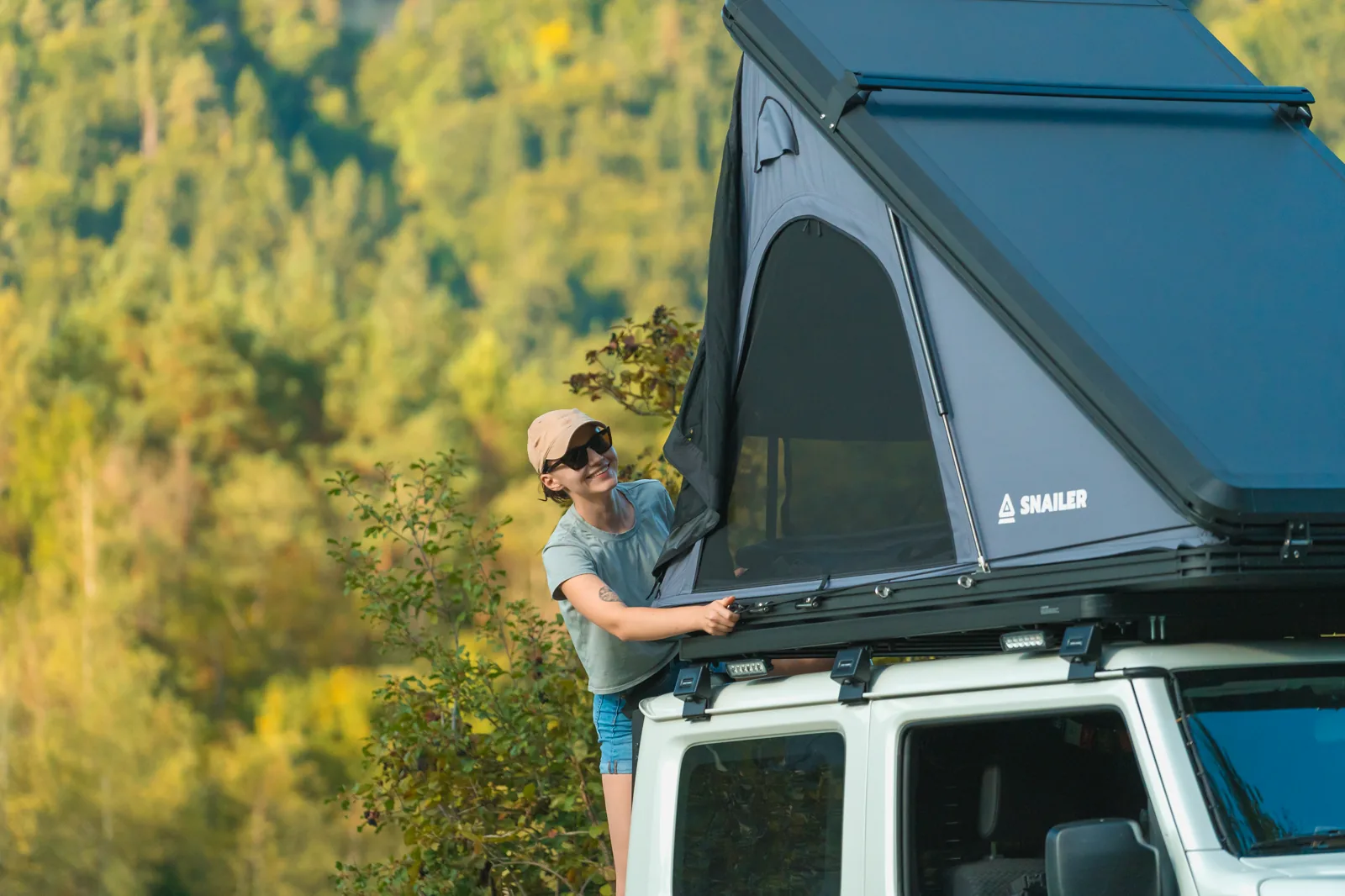
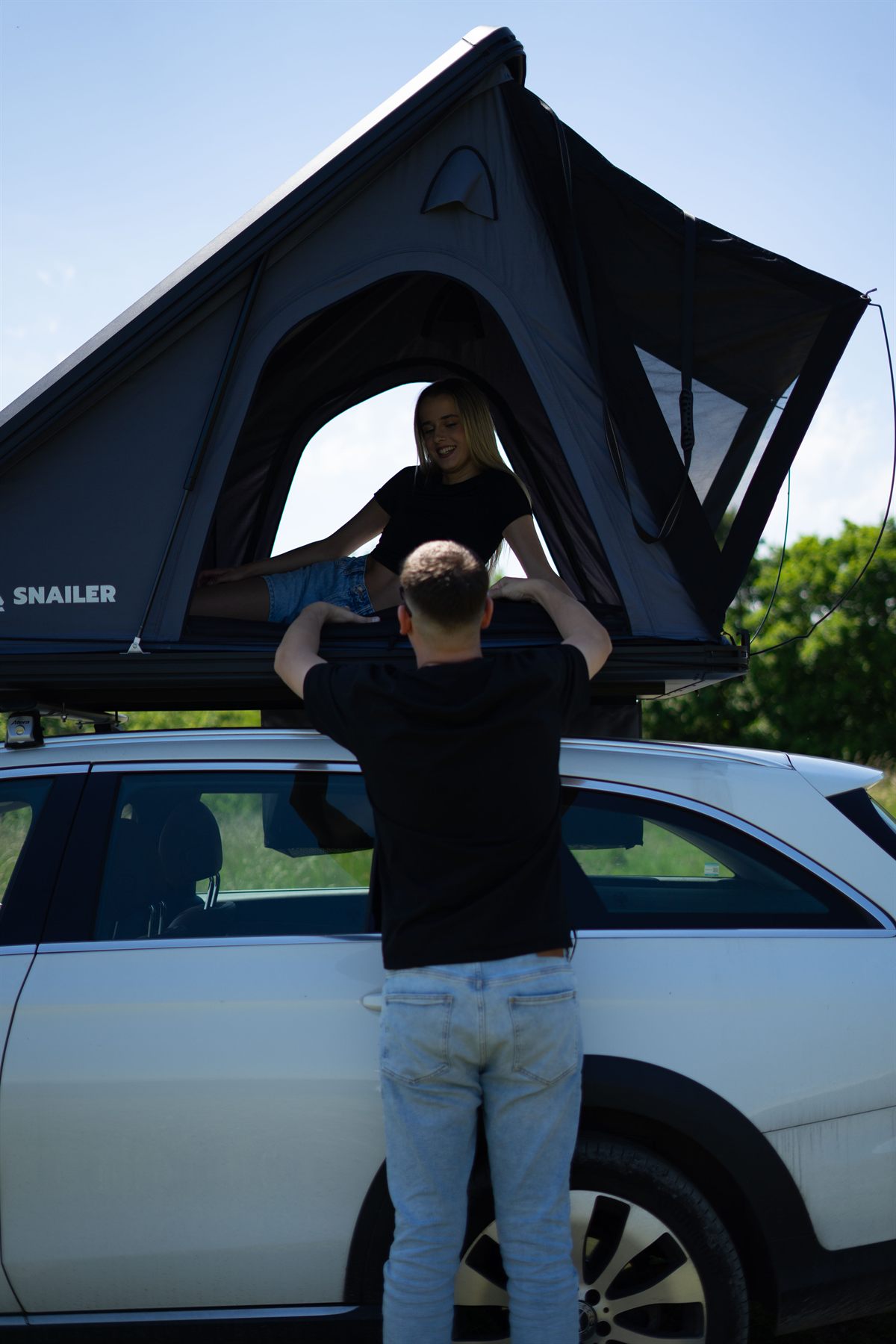
If you are considering buying a roof tent, the first thing you need to address is not just the weight of the tent itself, but how much load your car can realistically handle. A typical beginner's mistake is focusing solely on how many kilograms the tent can hold inside, completely ignoring the limits of the vehicle and the roof rack. In practice, you must always check three things at once: the car, the roof rack, and the tent itself.
Even more importantly, it is crucial to understand the difference between two key roof load capacity values: dynamic and static. With roof tents, the deciding factor is primarily how much weight your car can handle while driving, not just when you are safely parked at a campsite.
What Exactly Does Roof Tent Weight Mean?
When we talk about the weight of a roof tent, there is often confusion about what this figure actually represents.
Tent Weight vs. Tent Capacity
It is important to distinguish between these two basic concepts:
- Tent Weight: Refers to how much the tent itself physically weighs when you mount it on the roof. This value is critical for safe driving.
- Tent Capacity (Load Capacity): Indicates how many people and how much gear the tent can safely support inside while you are sleeping or spending time in it.
Why Tent Weight is Only One Part of the Equation
The weight of the tent itself is just one piece of the total load. To avoid exceeding your vehicle's permitted limits, you must add other items to the equation. Besides the tent, you are also carrying a roof rack (crossbars), a ladder (if not integrated directly into the tent), bedding left inside, and any other accessories (such as awnings). That is why it is important to know not only the weight of the tent but also the weight limit of the roof rack itself.
Dynamic vs. Static Load Capacity: The Difference You Must Understand
Confusing these two concepts is the most common and dangerous mistake when using roof tents.
What is Dynamic Roof Load Capacity?
Dynamic roof capacity indicates the maximum weight the car's roof and racks can safely carry while driving. While in motion (braking, cornering, driving over bumps), the forces acting on the roof are significantly greater than when stationary. This dynamic limit is the absolute main and decisive factor when buying a rooftop tent.
What is Static Roof Load Capacity?
Static load capacity indicates how much weight the car's roof can handle when the vehicle is parked. This limit already includes the weight of the people sleeping in the tent and all their equipment.
Why Static Capacity is Usually Much Higher
Static capacity is usually several times higher than dynamic capacity—often about 3 to 5 times more. However, the rule always applies that the value stated by the vehicle manufacturer is decisive, not a general estimate.
The reason for this difference is that when the car is stationary, the weight is not subjected to dynamic shocks and is evenly distributed across the solid body pillars. Furthermore, the unfolded tent ladder helps transfer a large portion of the load directly to the ground.
How Much Does a Roof Tent Usually Weigh?

When planning gear, many people wonder how much a roof tent actually weighs. It is not a negligible amount, and choosing the right type will directly affect your car's handling.
Average Weight of Roof Tents
The typical weight of roof tents starts at around 45 kg (100 lbs), with most models on the market ranging from 50 to 100 kg (110 - 220 lbs). Everything depends on the size of the tent and the materials used.
Weight: Soft Shell vs. Hard Shell
- Soft shell tents (fabric): Generally lighter due to their fabric construction and fewer solid parts. They are an ideal choice for smaller cars, SUVs with a lower roof limit, or those who want to transport other gear on the roof.
- Hard shell tents: More robust, weather-resistant, and quicker to set up, but their solid construction means significantly higher weight. They are better suited for larger SUVs, off-road vehicles, and pickup trucks.
How Much Weight Can a Roof Tent Hold Inside?
Now let's look inside—how much can the tent handle once it is set up and ready for the night?
Typical Roof Tent Load Capacity
Each model has its own limits. For standard two-person tents, the minimum load capacity is roughly 180 kg (400 lbs), which comfortably accommodates two adults with light luggage. Larger family tents typically have a capacity ranging from 360 to 450 kg (800 - 1000 lbs).
What Influences Tent Capacity
The maximum capacity depends on several factors:
- Materials: Aluminum frames and reinforced steel hinges can support much more than standard designs.
- Floor construction: Solid, insulated panels (often with a honeycomb structure) distribute weight significantly better.
- Tent size: Tents designed for 3 to 4 people are structurally dimensioned for a higher load.
How Much Load Can Your Car's Roof Handle?

Even the best tent won't help you if your car or roof racks can't handle its weight.
The Car Roof Limit
Every vehicle has a dynamic roof limit strictly defined by the manufacturer. You can find this information fastest in the owner's manual or on an information sticker, which is usually located on the driver's side door pillar.
Where to Find the Car Roof Load Capacity
If you are unsure, here is a short list of places where you will definitely find this important data:
- In the vehicle's owner's manual.
- On the plate or sticker near the driver's door.
- In the manufacturer's technical documentation (or vehicle registration certificate).
- On the vehicle manufacturer's official website.
- At an authorized dealer or service center.
Roof Rack / Crossbars Limit
The limit of the roof racks or crossbars themselves is a separate category. Even if your car's roof has a dynamic capacity of, say, 100 kg, your crossbars might only be rated for 70 kg. In that case, you must go by the lower value.
Attention: Even if the car has a sufficient roof limit, unsuitable or weak crossbars can compromise the whole system. With a roof tent, the rule of the weakest link always applies: the lowest value out of the car limit, roof rack limit, and the tent limit itself is the deciding factor. You can find these specs in the rack manual, on the manufacturer's website, or in a specific brand's compatibility configurator.
Check Your Vehicle's Roof Type
According to roof rack experts, not every car roof is suited for a tent's load. The most suitable vehicles are those with specific mounting points (fixpoints), integrated rails (flush rails), or classic raised side rails (ideally with at least three support points). If you have a bare "normal" roof or a panoramic glass roof, you must check directly with the manufacturer, as these types are often not strong enough to safely carry the combined weight of the tent and its occupants.
Choose the Right Roof Racks (Crossbars)
Your roof's load capacity is only as strong as the crossbars that support it. For mounting a roof tent, it is recommended to use heavy-duty systems with bars that extend past the mounting feet (such as Thule Evo WingBars or Evo ProBars), as they provide the sturdiest load platform. Avoid using racks that do not extend past the feet ("Edge" style) or telescopic bars, since they are usually not compatible with the structural requirements of roof tents.
How to Calculate if Your Car Can Hold a Roof Tent?
As a general baseline, your vehicle and roof rack must have a minimum dynamic load capacity of at least 75 kg (165 lbs). The calculation is simple, but you must proceed systematically:
1. Check the roof rack limit: Tent weight + accessories on the roof must be lower than the dynamic capacity of the racks themselves. 2. Check the car roof limit while driving: Tent weight + rack weight + accessories must be cumulatively lower than the car roof's dynamic capacity. 3. Check the static load while sleeping: When sleeping in the tent, the total weight (tent + racks + people + luggage inside) must not exceed the respective static limit of the vehicle. Since different manufacturers might state static capacity differently, a safe rule of thumb is to always follow the vehicle manual or official recommendations.
For a better idea, let's look at a practical example of calculating the dynamic load:
| Item on the Roof | Weight (Example) |
|---|---|
| Roof Rack (Crossbars) | 7 kg |
| Roof Tent | 55 kg |
| Ladder (if not integrated) | 4 kg |
| Accessories and Bedding | 3 kg |
| Total Roof Load While Driving | 69 kg |
Conclusion: In this example, if your car (and rack) has a dynamic load capacity of 75 kg, you are safe with a total load of 69 kg. If the car's limit was only 60 kg, you would need to look for a lighter tent.
Off-Road Driving Changes the Rules
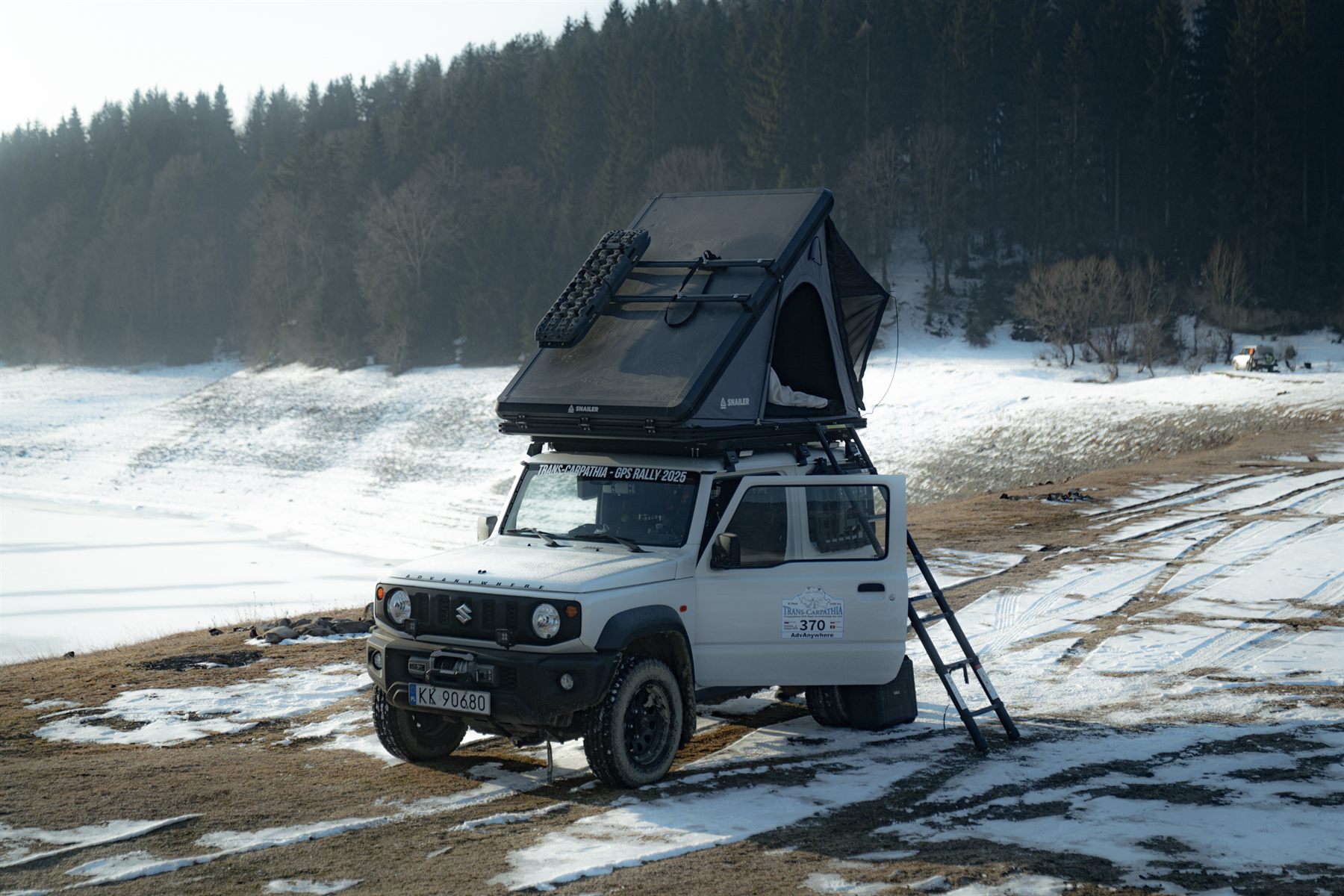
Driving off paved roads completely changes the weight math.
Why Off-Road Loads Are More Demanding
When driving off-road, strong vibrations, steep inclines, and impacts from bumps subject the car and roof rack to tremendous stress. These forces multiply the dynamic load on the roof. For this reason, most manufacturers recommend reducing the official roof and rack capacity by 30% to 50% for off-road use.
Why a Lighter Tent Might Be a Better Choice
If you plan regular trips off the tarmac, a lighter tent (often a soft shell) is undoubtedly a better choice. This means less stress on your roof and racks, lowering the vehicle's center of gravity, which drastically improves stability on inclines and reduces the risk of rolling over.
Quick Checklist Before Buying a Roof Tent
Before you click the "Buy" button, go through this quick checklist:
- Check the dynamic roof limit: Look in the car's manual or the information sticker on the door pillar.
- Check the roof rack limit: Review the manufacturer specs for your crossbars.
- Calculate the total load: Add up the weight of the tent + rack + accessories.
- Check the mounting type: Make sure your roof and crossbars are compatible with the tent's mounting system.
- Consider a lighter alternative: If you drive a smaller SUV or plan on off-roading, look for a tent with a lower weight.