More and more outdoor enthusiasts are asking themselves before the summer season or buying new gear: is it worth investing in a roof tent, or is a classic ground tent enough? The truth is, every traveler is looking for something different when camping. While some swear by the traditional connection with nature, others prefer maximum comfort and mobility on the road.
In this guide, we will take a detailed look at the comparison between a roof tent and a ground tent. We will go over their real advantages, limitations, and help you find out which solution best fits your personal travel style.
What is a roof tent?
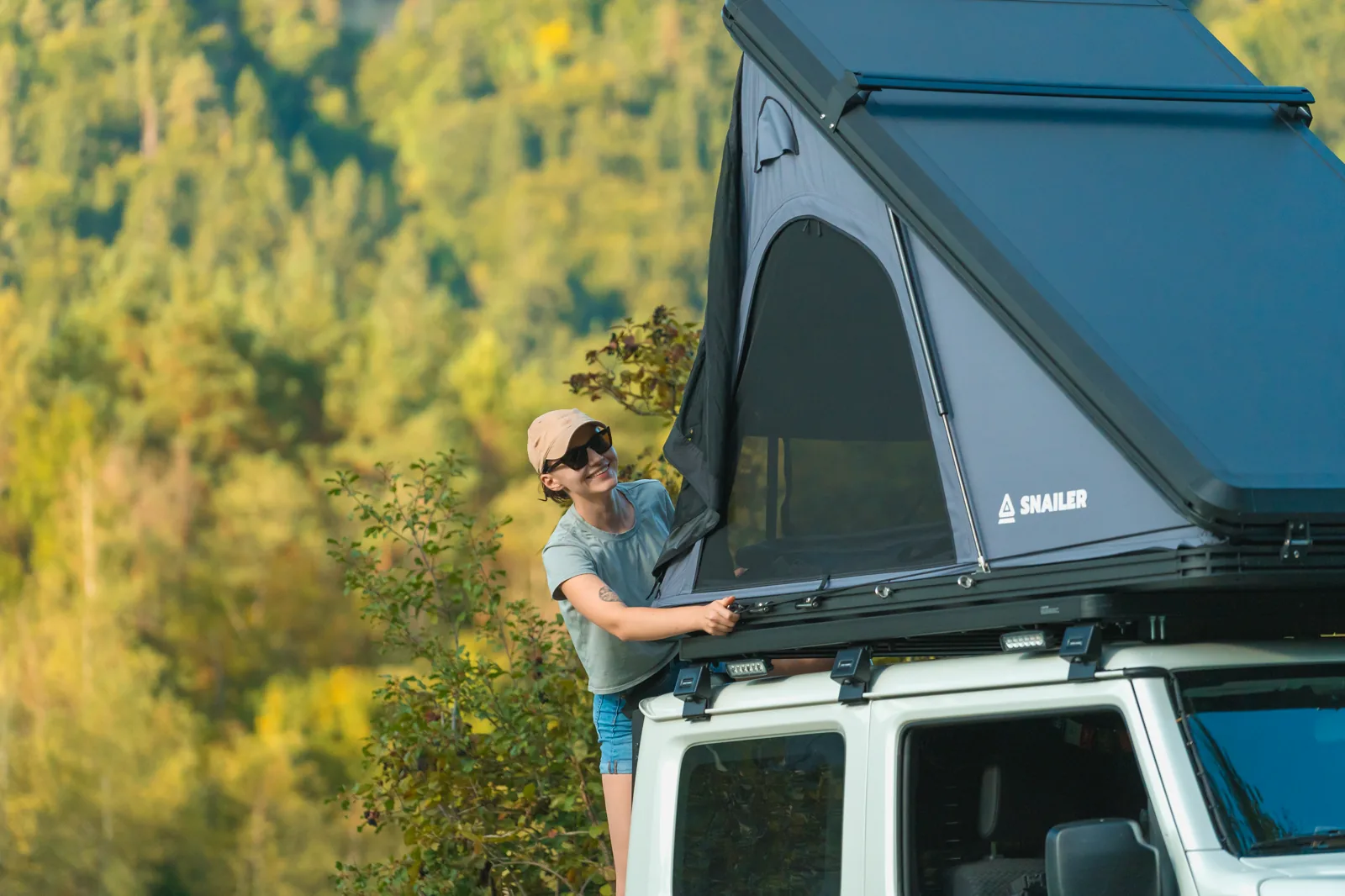
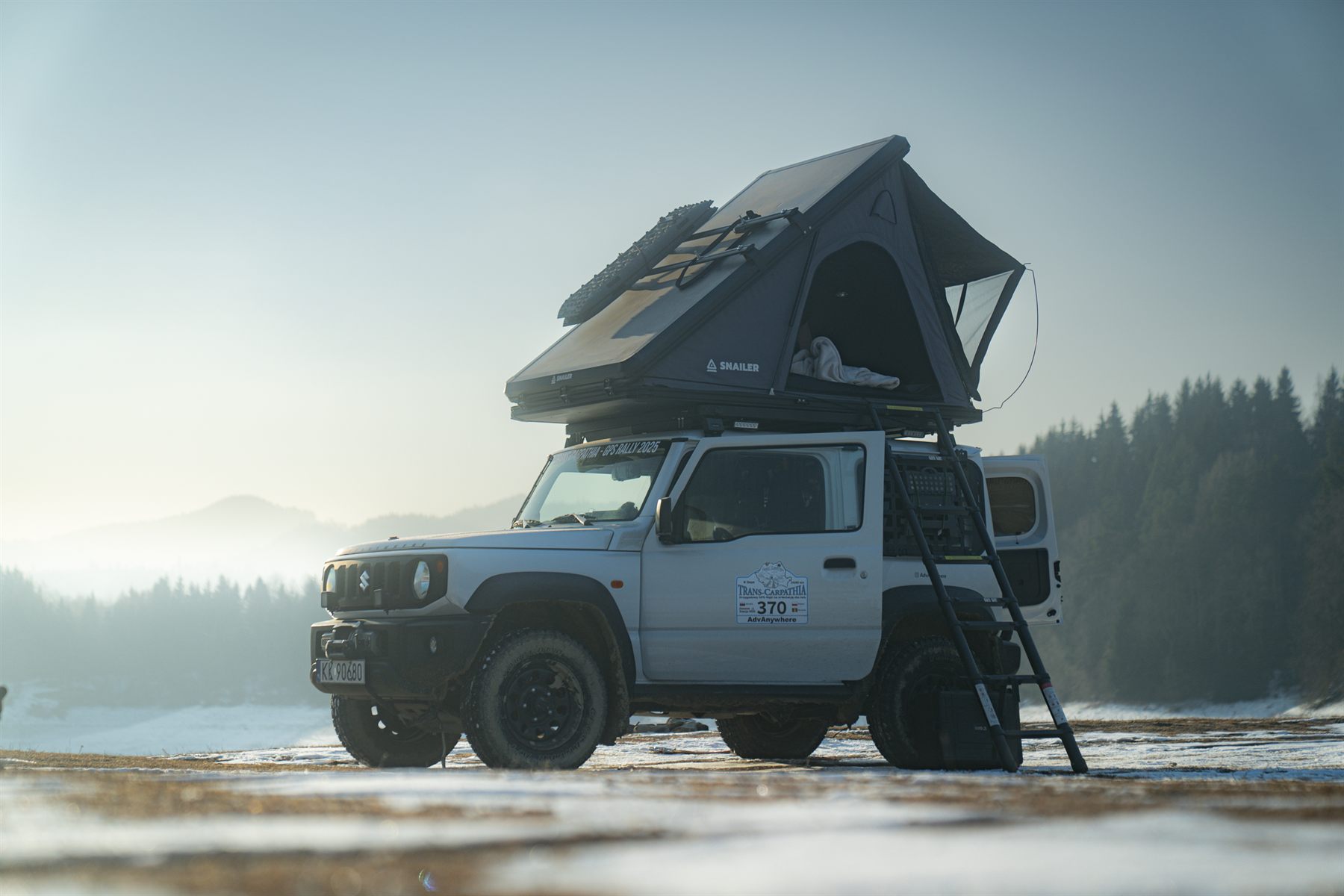
A roof tent is a robust camping tent designed to be mounted directly onto the roof rack or crossbars of your vehicle. With this simple upgrade, you can turn almost any suitable car into a mobile base camp without having to invest in an expensive camper conversion. These tents are extremely popular among long road trip enthusiasts, expedition travelers, and people who like to change locations frequently.
When comparing a roof tent with a regular ground tent, the biggest difference lies in its integration with the car. While you carry a classic tent in the trunk and pitch it on the ground, a roof tent remains securely anchored to the car throughout the entire trip. This naturally affects not only your comfort but also how you plan your entire expedition.
Setting up and packing away the tent
The time and energy saved when setting up camp are a decisive factor for many travellers.
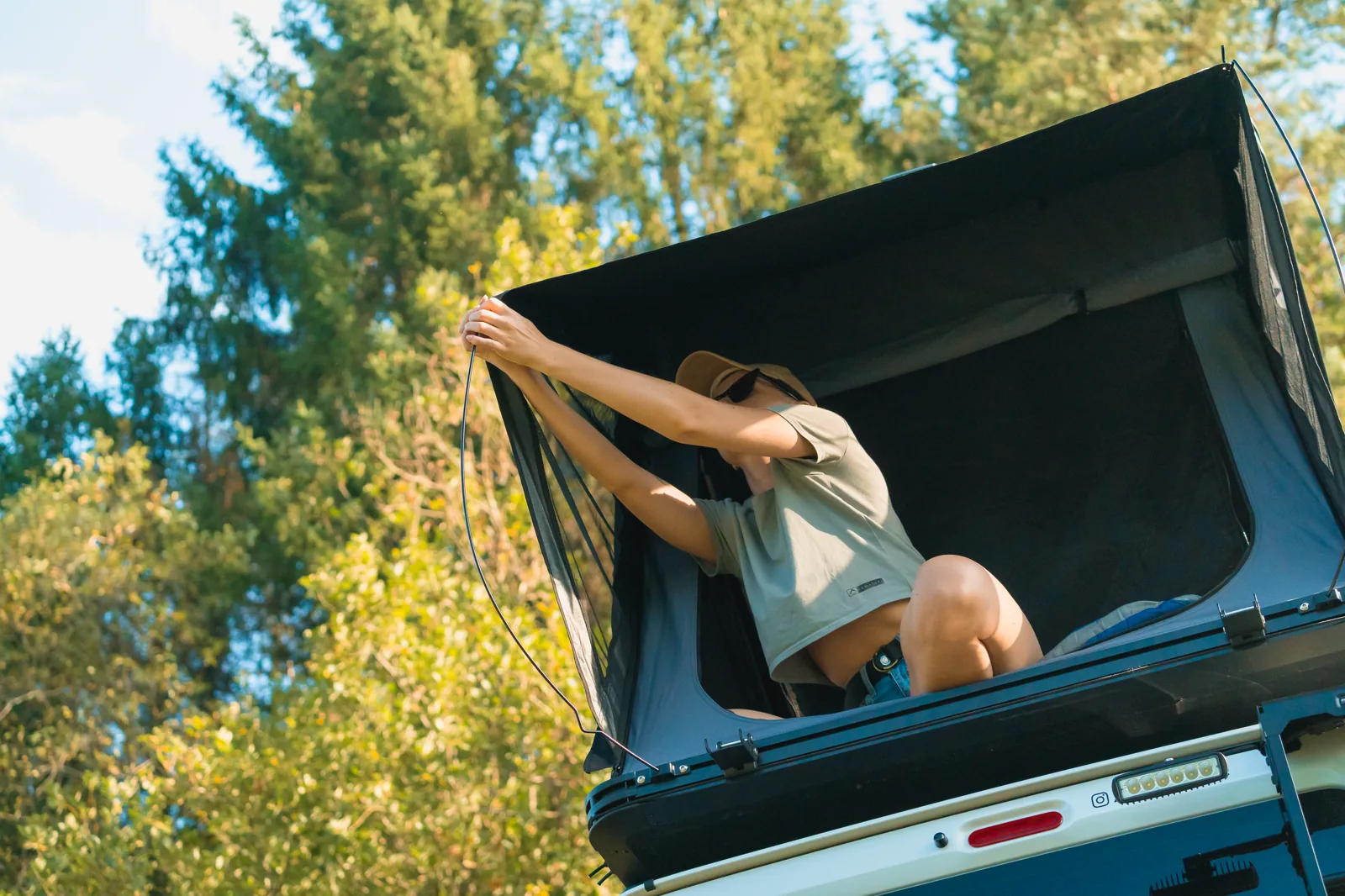
Roof tent: In this category, the roof tent has a major advantage. High-quality hard-shell models can be unlocked and opened in around 30 seconds. Fabric versions of roof tents take a few minutes longer, but they are still a fast solution without the need to assemble poles, tension ropes or look for the perfect spot on the ground.
Classic tent: A classic tent requires more time and preparation. First, you need to find a flat surface, clear it of branches and stones, lay out the groundsheet, assemble the poles, stretch the outer flysheet and secure the pegs. This process can take 15 to 30 minutes and, in rain or strong wind, can become even more difficult. Packing the tent away and cleaning mud from it can also take quite a long time.
Comfort: which tent is more comfortable after a long day?
After a long day behind the wheel, on a bike or on a hiking trail, sleep quality also matters.
Roof tent: Roof tents offer a higher level of comfort. They usually include an integrated high-density foam mattress, often around 7.5 cm thick. You sleep on a stable and even surface, and in some models, you can leave blankets and pillows inside the tent even while driving. The feeling is therefore closer to sleeping in a small bed on the roof of your car than in a classic tent on the ground.
Classic tent: A classic tent on its own provides almost no cushioning. Comfort depends on the equipment you bring with you, such as a sleeping mat, inflatable mattress or sleeping bag. If you underestimate insulation from the ground, an uneven or cold surface can quickly affect your sleep quality.
Terrain: where is it easier to set up camp?
Choosing the right place to spend the night can be a bigger challenge at the end of the day than it may seem.
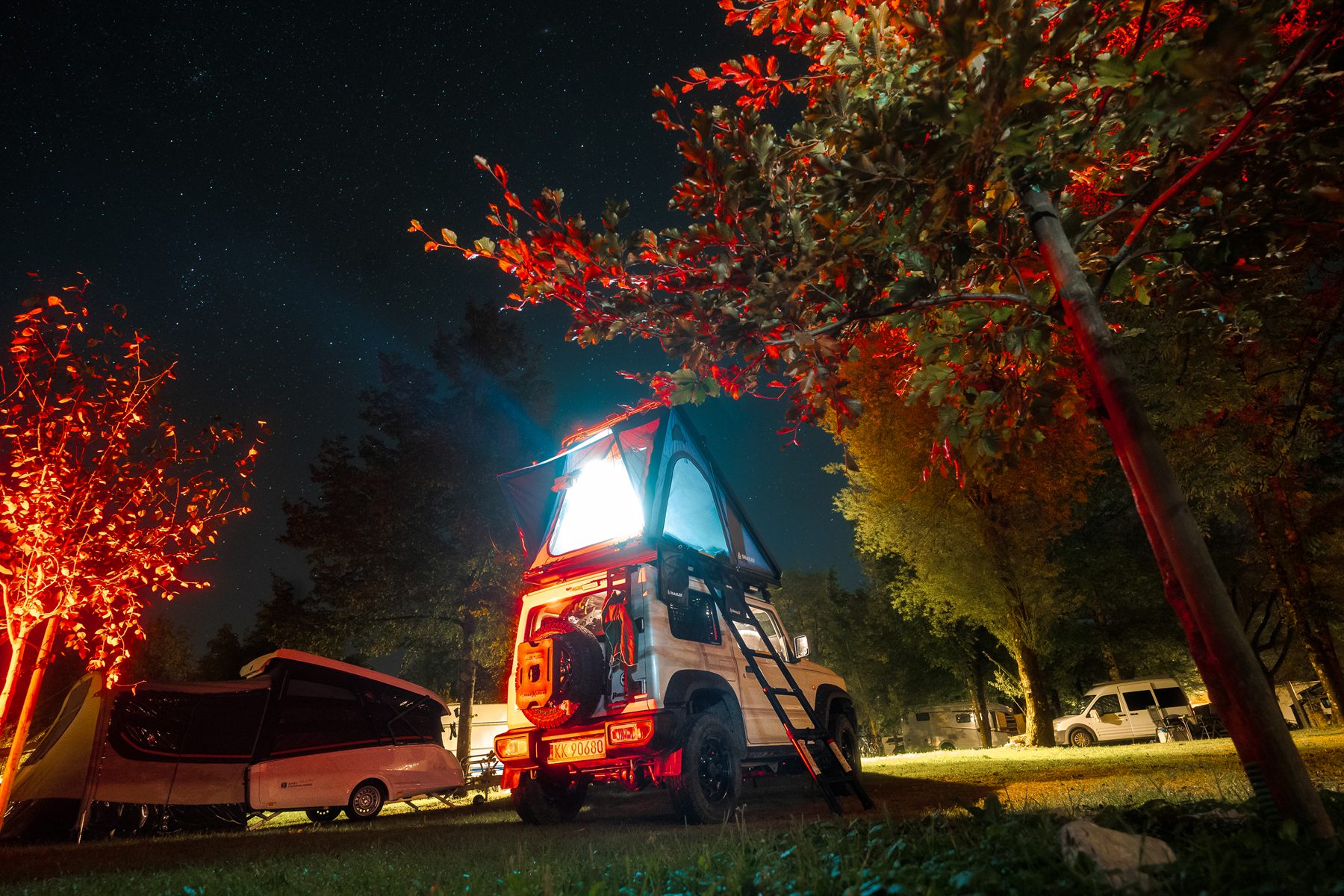
Roof tent: With a roof tent, you camp where you park. Since the tent is mounted on the roof of the car, mud, stones, tall grass or damp ground are less of a problem. If you are parked on a slight slope, you can level the vehicle using levelling wedges. The main limit is therefore simply where your car can realistically go.
Classic tent: With a classic tent, you are more dependent on the terrain. You need a surface that is flat, dry and safe enough, without sharp stones or roots. On the other hand, a classic tent has a major advantage in terms of freedom of movement. You can pack it into a backpack and carry it into the forest, onto a meadow or into the mountains, where a car would never reach.
Weather resistance and colder nights

Protection from the weather is one of the most important things when camping.
Roof tent: In a roof tent, you are physically raised above the ground, so you are less exposed to wet soil, mud or water running along the ground during heavy rain. Roof tents are usually made from stronger and more durable materials that handle wind, rain and colder nights well. Thanks to the elevated position and thicker fabric, you can feel more protected and comfortable.
Classic tent: Good-quality classic tents can be very resistant to rain and wind, especially if they are trekking or expedition models. Their weak point, however, remains contact with the ground. Cold rising from below requires a good sleeping mat and a suitable sleeping bag. During heavy rain, there is also always a risk that water may get under the tent floor or around the tent.
Insects and curious animals
Camping often also brings encounters with local wildlife, which not everyone welcomes.
Roof tent: Thanks to its height above the ground, you are better protected from crawling insects, ants, spiders, snakes and smaller wild animals. The elevated position also provides greater psychological comfort, especially if you are sleeping in an unfamiliar place or in areas where animals often move around.
Classic tent: In a classic tent, you sleep directly on the ground, meaning in the natural environment of insects and smaller animals. Internal mosquito nets provide good protection, but all it takes is a moment of inattention when opening the zip for unwanted visitors to get inside the tent.
Disadvantages of a roof tent to consider before buying
A roof tent has many advantages, but it is not the ideal solution for everyone. Before buying one, it is worth considering its practical limitations as well.
It is not completely universal. You need a suitable car, compatible roof bars and sufficient roof load capacity. It is therefore not enough to choose only the tent itself — it is also important to check the technical possibilities of your vehicle.
It increases the height of the car. A roof tent can limit parking in garages, underground car parks or passing under low barriers. This limitation is often mentioned in outdoor comparisons, which point out the additional height of the vehicle when using a roof tent.
It affects driving and fuel consumption. A roof tent changes the aerodynamics of the car, which you may notice especially on longer journeys and at higher speeds. The car may consume more fuel, have greater air resistance and, in some cases, slightly different driving behaviour.
It is harder to store outside the season. Unlike a classic tent, you cannot simply fold it up and put it in a wardrobe. You need a garage, a stand, a cellar or another space where it can be stored safely.
It is not ideal for large groups. Most roof tents are designed mainly for 2–4 people. If you travel as a larger family or group, a classic family tent can offer more space, more privacy and more practical use during the day.
Price and long-term value
When choosing, it is not only about the price of the tent itself, but also how often you will use it and what style of travel you prefer.
Roof tent: This is a more premium solution with a higher purchase price. In addition to the tent, you also need to consider the cost of roof bars and any additional accessories. A roof tent may also increase fuel consumption, especially on longer journeys. However, for people who travel regularly, enjoy road trips or practise overlanding, it can make a lot of sense because it saves time, increases comfort and makes frequent moves easier.
Classic tent: A classic tent is more affordable and, if damaged, can often be repaired easily or by replacing a single part. It does not affect the car’s fuel consumption because it is transported folded in the boot or in a backpack. For occasional campers, hikers or travellers with a limited budget, it is a practical and economical choice.
Choose a tent based on your camping style
The best choice depends on how you travel. One tent may be ideal for a weekend road trip by car, another for a family camping holiday and another for a hiking trip far from civilisation.
For road trips and overlanding
For road trips and overlanding, the roof tent usually wins. It is ready quickly, you do not need to look for a perfectly flat and dry surface on the ground, and it handles frequent moves from one place to another better. If you sleep somewhere different every day, you will quickly appreciate the fast setup and pack-down.
For trekking and camping without a car
For trekking and camping without a car, the classic tent wins. You can pack it into a backpack and reach places where a car cannot go. If you plan to sleep in the mountains, along hiking trails or far from roads, a roof tent will not help you because it remains tied to the vehicle.
For family camping
For family camping, the classic tent often wins, especially if you travel with small children, a dog or need more space. Large classic tents can offer separate sleeping areas, space for luggage and easier access at night. This is especially practical with children or pets.
For short weekend trips by car
For short weekend trips by car, a roof tent may be the better choice. If you want minimal preparation, fast setup and a comfortable sleep without worrying about the ground, a roof tent can make the entire trip much simpler.
For a longer stay at one campsite
For a longer stay at one campsite, a classic tent makes more sense. It can stay pitched in one place while you use the car during the day for trips, shopping or moving around the area. With a roof tent, on the other hand, you need to close it every time you want to drive somewhere.
Roof tent vs. classic tent: key differences
To help you get oriented quickly, we have prepared a clear table summarising the most important practical differences.
| Parameter | Roof tent | Classic tent |
|---|---|---|
| Setup time | From 30 seconds to a few minutes | 15–30 minutes |
| Comfort and sleep | High comfort, often with an integrated mattress | Depends on the equipment you bring and sleeping mats |
| Terrain impact | Low, you camp where you park | High, you need a flat and dry surface |
| Protection from insects and animals | Better thanks to the elevated position | Basic, you sleep directly close to the ground |
| Portability and freedom | Tied to the availability of the vehicle | Can be carried in a backpack, even off-road |
| Price and costs | Higher investment, possible impact on fuel consumption | Lower price, no impact on the car |
| Capacity | Usually 2–4 people | From small trekking tents to large family tents |
| Storage | Requires more space outside the season | Easy to store in a wardrobe, cellar or boot |
So which one makes more sense for you?
There is no single winner between a classic tent and a roof tent. There is only the solution that better suits your style of travel.
A roof tent is ideal for you if you mainly travel by car, often change locations and want to have as little work as possible in the evening when setting up camp. It is suitable for solo travellers, couples or smaller groups who value comfort, quick moves and sleeping above the ground.
Choose a classic ground tent if you travel with small children, in a larger group, have a more limited budget or want to camp without a car as well. It is practical for trekking, longer stays at one campsite and any situation where you need more space and greater flexibility.
So if you mainly plan road trips, overlanding and short car-based trips, a roof tent can significantly increase your comfort. If, however, you want a universal, affordable and easy-to-carry solution, the classic tent remains a very strong choice.