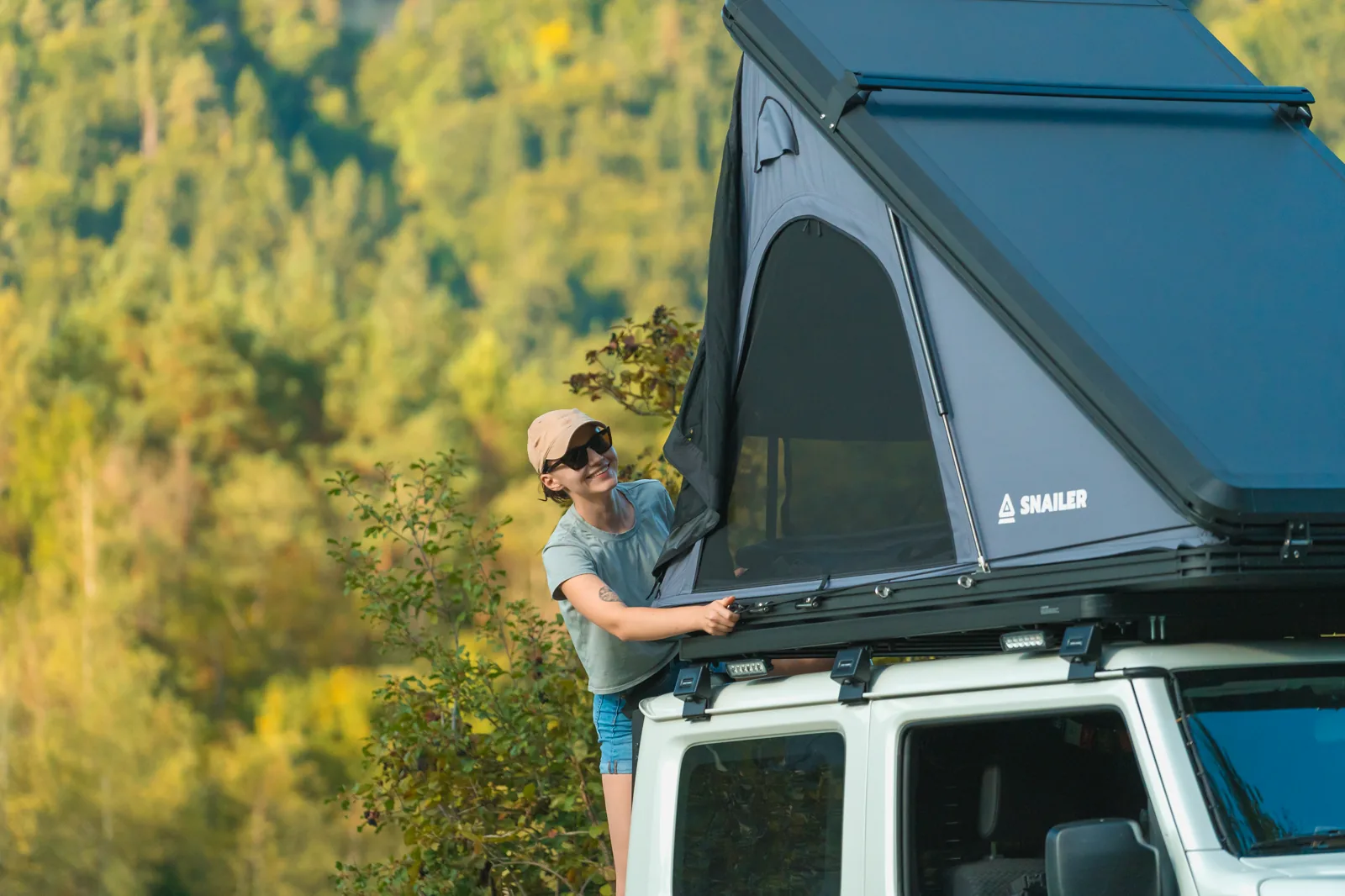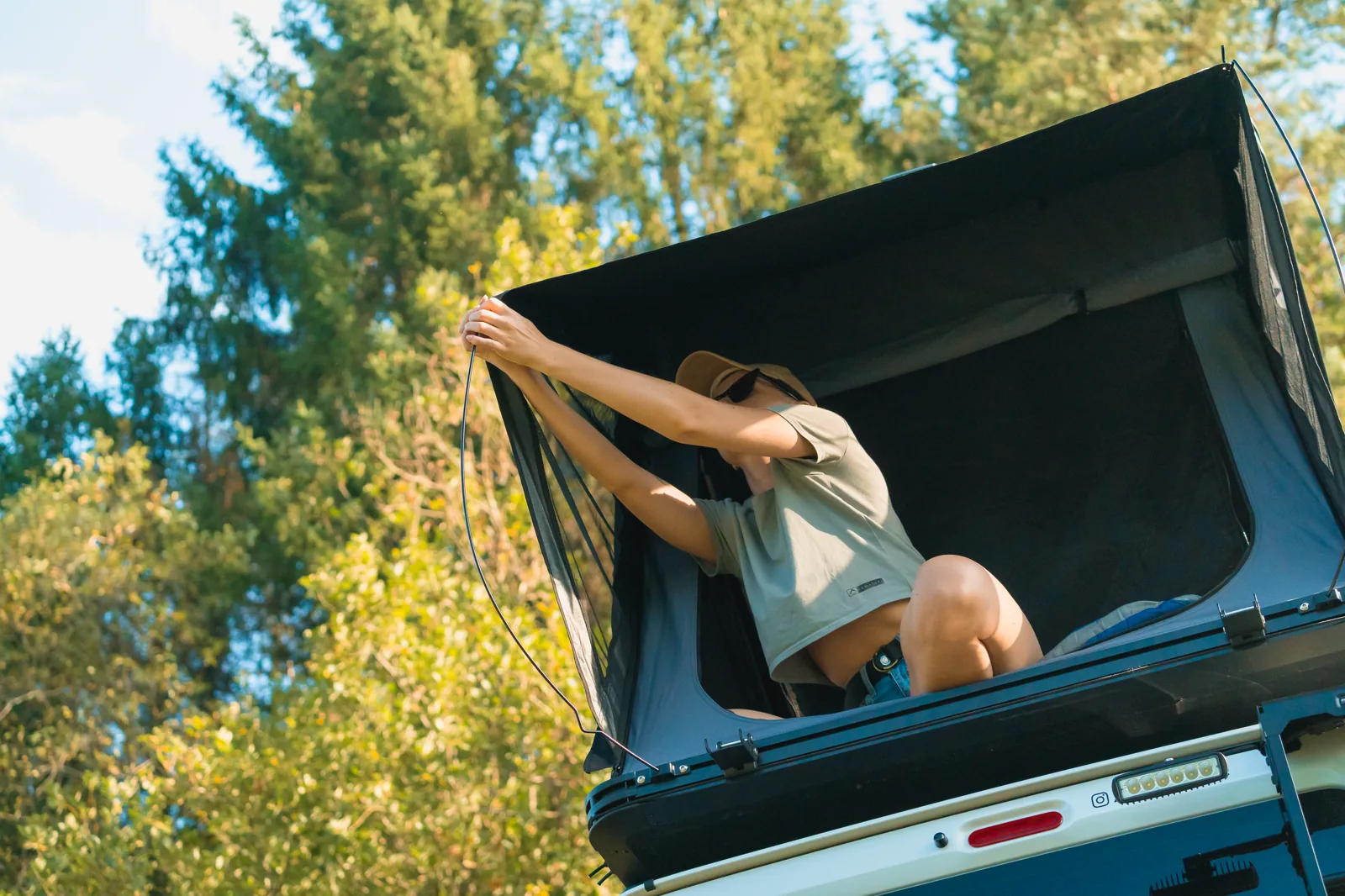
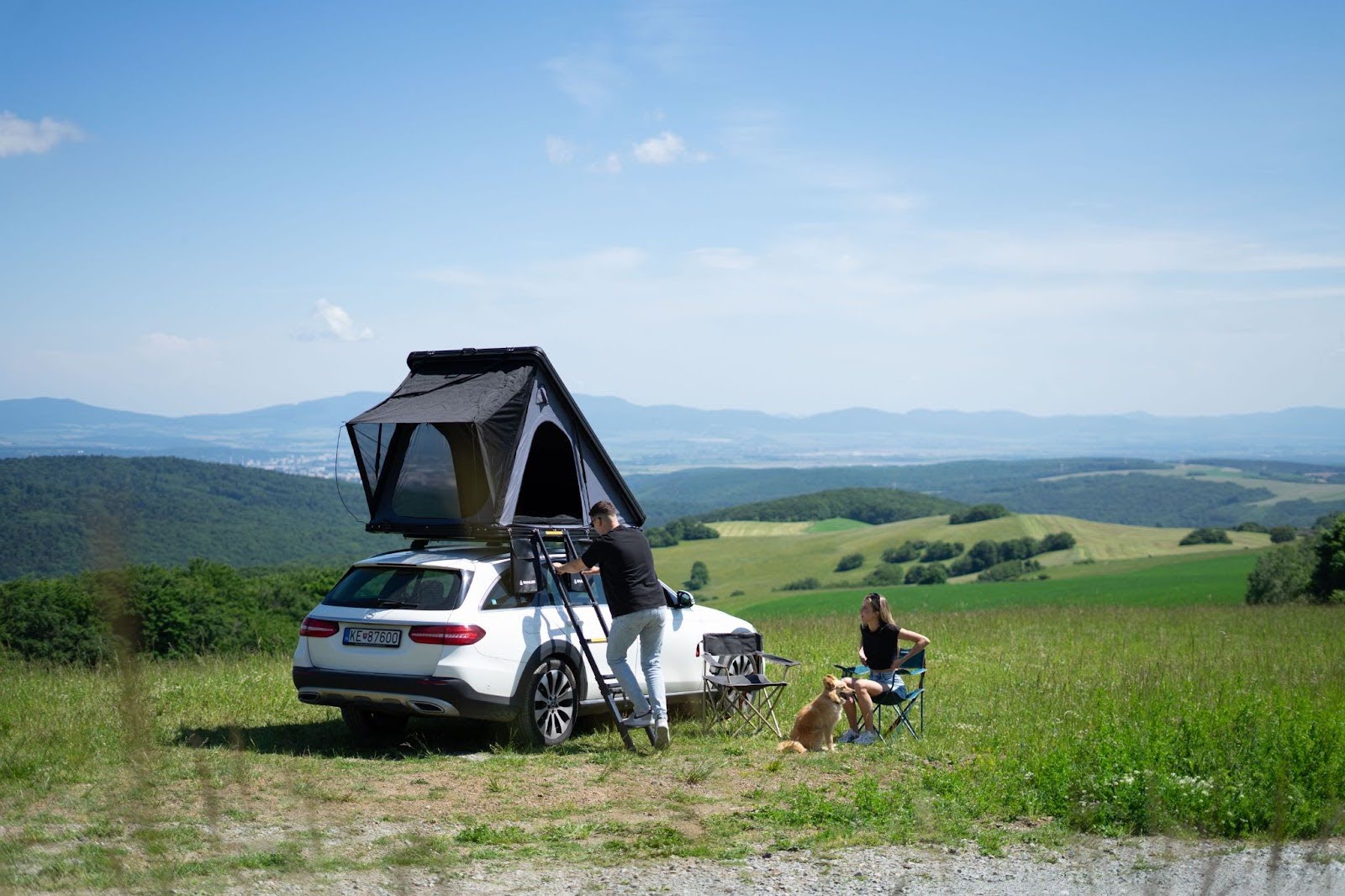

A rooftop tent is a foldable camping tent mounted on the roof racks or crossbars of a vehicle. It unfolds in just a few minutes and typically includes an integrated mattress and a ladder, allowing you to sleep comfortably above ground level. Most models can accommodate 2–4 people, depending on size and design.
In this article, you will learn what a rooftop tent consists of, how to choose the right one for your vehicle, and whether a rooftop tent is worth it for your specific travel style. We will also look at the technical details of installation and practical tips for families.
What is a roof tent and what is it made of?
Simply put, a rooftop tent is a camping system mounted directly onto the roof of your vehicle. It has become popular among travelers primarily because of its setup speed and the comfort it offers compared to traditional ground tents.
What are the benefits of a roof top tent?
- Safety and Cleanliness: You are high above the ground, which protects you from moisture, insects, and curious wildlife.
- Speed: Most models can be ready for sleep within a few minutes.
- Comfort: The tents include an integrated mattress, which is generally much more comfortable than inflatable mats.
The tent's construction briefly consists of a solid base (floor), an aluminum or fiberglass frame, durable fabric, and a ladder that serves not only for entry but often as a support point for the entire structure.
What to expect from a quality rooftop tent
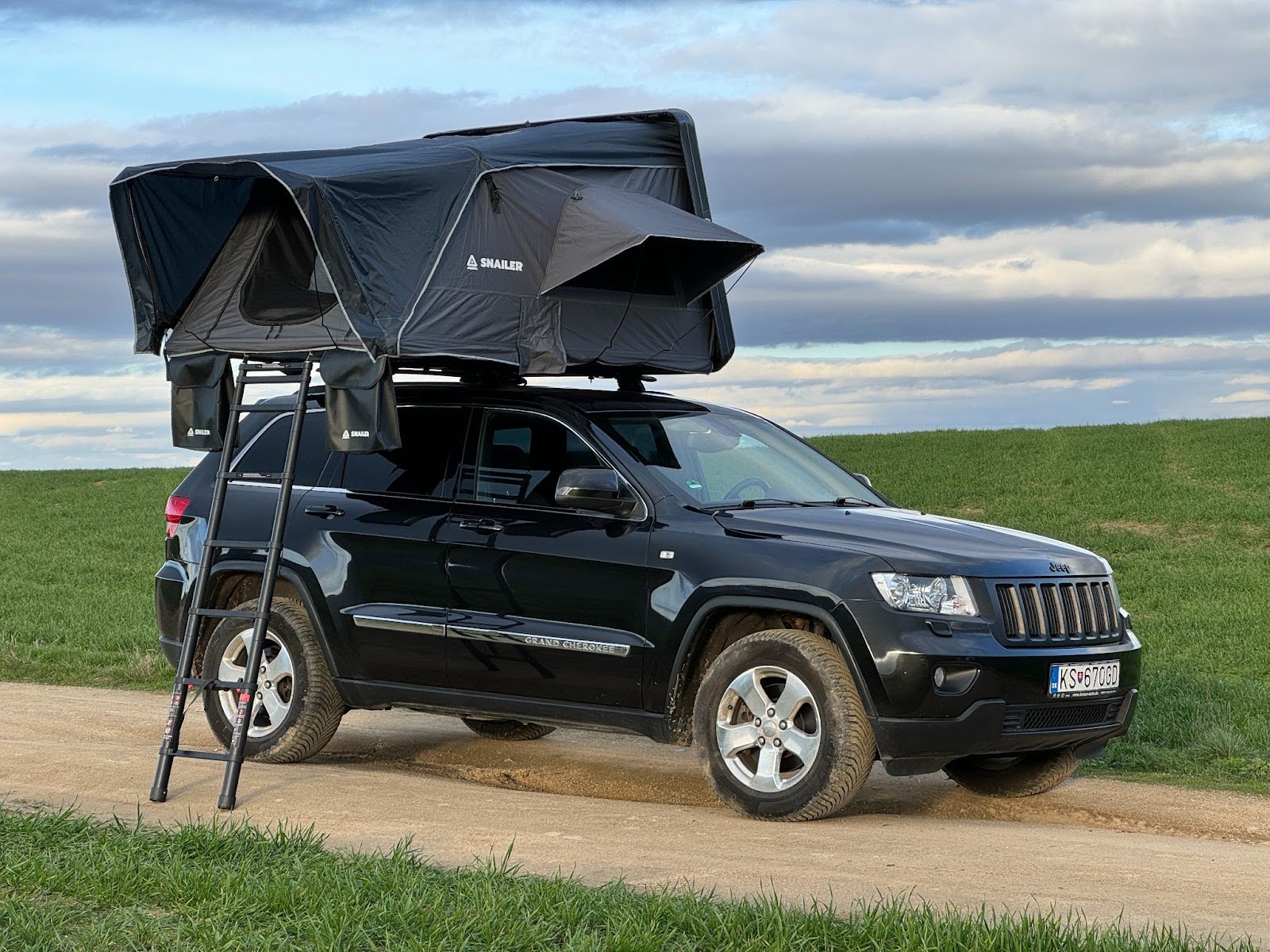
A quality rooftop tent should offer durable construction (such as an aluminum or reinforced plastic shell), a stable mechanism for quick setup, and breathable, waterproof fabric. However, what truly distinguishes premium models are features like high-density double-layer mattresses, insect-proof mesh windows, integrated LED lighting, ample storage pockets, and external shoe bags.
Types of rooftop tents
When choosing, you will encounter two main categories, each answering the question of how do rooftop tents work with a slightly different mechanism:
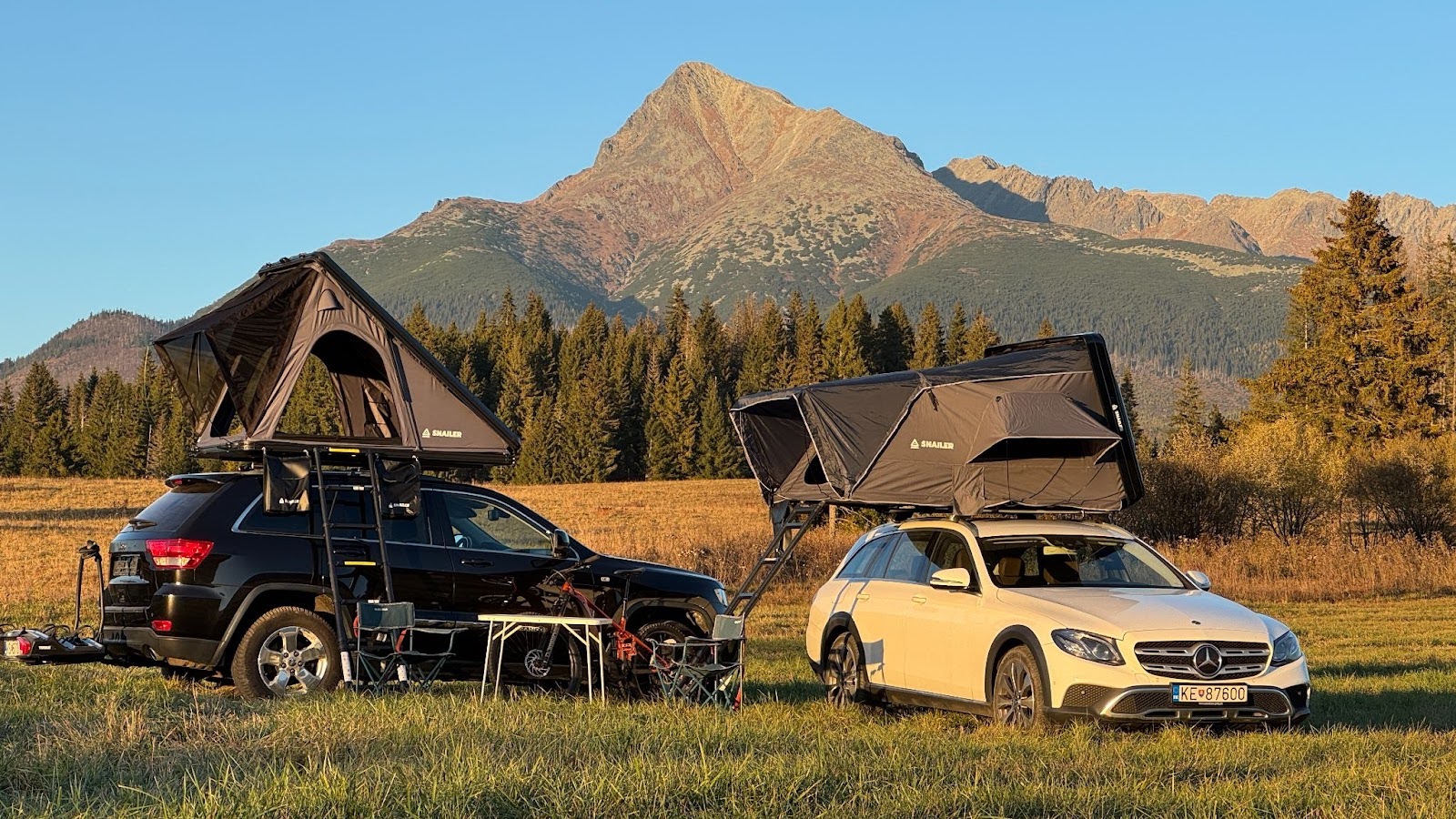
- Soft-shell tents: These look like traditional tents that fold out. Once deployed, they offer a larger surface area, often exceeding the footprint of the car. They are ideal for families.
- Hard-shell tents: The tent is hidden in a rigid box (similar to a roof box). It opens to the side or in a V-shape using gas struts (clamshell-type). These are more aerodynamic and durable in bad weather.
Depending on your size needs and travel style, you can choose:
- Solo / For couples: Compact models with low weight.
- Family tents: Spacious versions for 3–4 people.
- Rugged models: Robust designs for long expeditions and off-roading.
How to find out if a rooftop tent fits your car
Many people ask: what do you need for a roof top tent? The answer is primarily a high-quality mounting system.
- Fixed rails vs. crossbars: A tent is never mounted directly onto the roof sheet metal. You need crossbars with sufficient dynamic load capacity (the weight the roof can carry while driving).
- Vehicle type: While SUVs and off-roads are natural choices, many models also fit wagons (kombi), vans, and pick-ups. It is important that the tent's footprint does not significantly exceed the roof dimensions.
How do rooftop tents work: Installation and use
If you are wondering how do rooftop tents work (how to set up/prepare a rooftop tent), the process is actually very intuitive:
- Mounting to the racks: The tent is attached to the crossbars using steel brackets and bolts.
- Unlocking: You release the safety straps or shell locks.
- Deployment: Using the ladder, you fold the tent out (side-opening) or let the gas struts do the work for you (clam-shell).
- Securing: You adjust the telescopic ladder and set up the tension rods for the windows.
Pros and Cons of a roof tent
| + Pros | - Cons |
|---|---|
| Fast setup: Ready in minutes compared to traditional tents. | Vehicle dependency: Your car must remain stationary once the tent is deployed. |
| Comfort: Built-in dense mattresses ensure a great night's sleep. | Fuel efficiency: Slight increase in fuel consumption due to air resistance. |
| Elevated position: Safe from ground moisture, bugs, and crawling animals. | Initial cost: Higher upfront investment than ground tents. |
| Durability: Made from high-quality, weather-resistant materials. | Storage: Requires space in a garage or shed when not mounted on the car. |
Frequently Asked Questions (FAQ)
Do I need a roof rack, or can I mount the tent directly to the roof?
The tent must be mounted on crossbars, not directly on the roof. Ensure your crossbars have a dynamic load capacity exceeding the tent's weight.
How much does a rooftop tent weigh and how does it affect driving?
Standard tents weigh between 50 and 80 kg. You should expect a slight increase in the center of gravity and fuel consumption (approx. 0.5 – 1 l/100 km).
Is a rooftop tent suitable for families with small children?
Definitely! Kids love the "treehouse" feel. For families, we recommend wider/spacious models like the SNAILER Abis MAX.
Can I drive through a car wash or into an underground garage with the tent?
We do not recommend using automatic car washes with a tent. In underground garages, always check the total height of the vehicle including the tent beforehand.
Can a rooftop tent be combined with a kayak, bikes, or a roof box?
Some tents can be fitted with additional crossbars on top, which you can use for the transport of lighter items, boards, or even bikes and boxes.
Down to what temperature can you sleep in a rooftop tent?
With a quality sleeping bag or an external heater, sleeping can still be comfortable even in winter. Some adventurers stay in them year-round.
See all Frequently Asked Questions →
Conclusion: Investing in a rooftop tent opens the door to new experiences. If you are still wondering is a rooftop tent worth it, you will find the answer during your very first morning spent in nature, far away from crowded hotels.
Would you like advice on choosing a specific SNAILER model for your vehicle?
Our experts are ready to help you find the perfect match for your car and travel style.
Contact Us