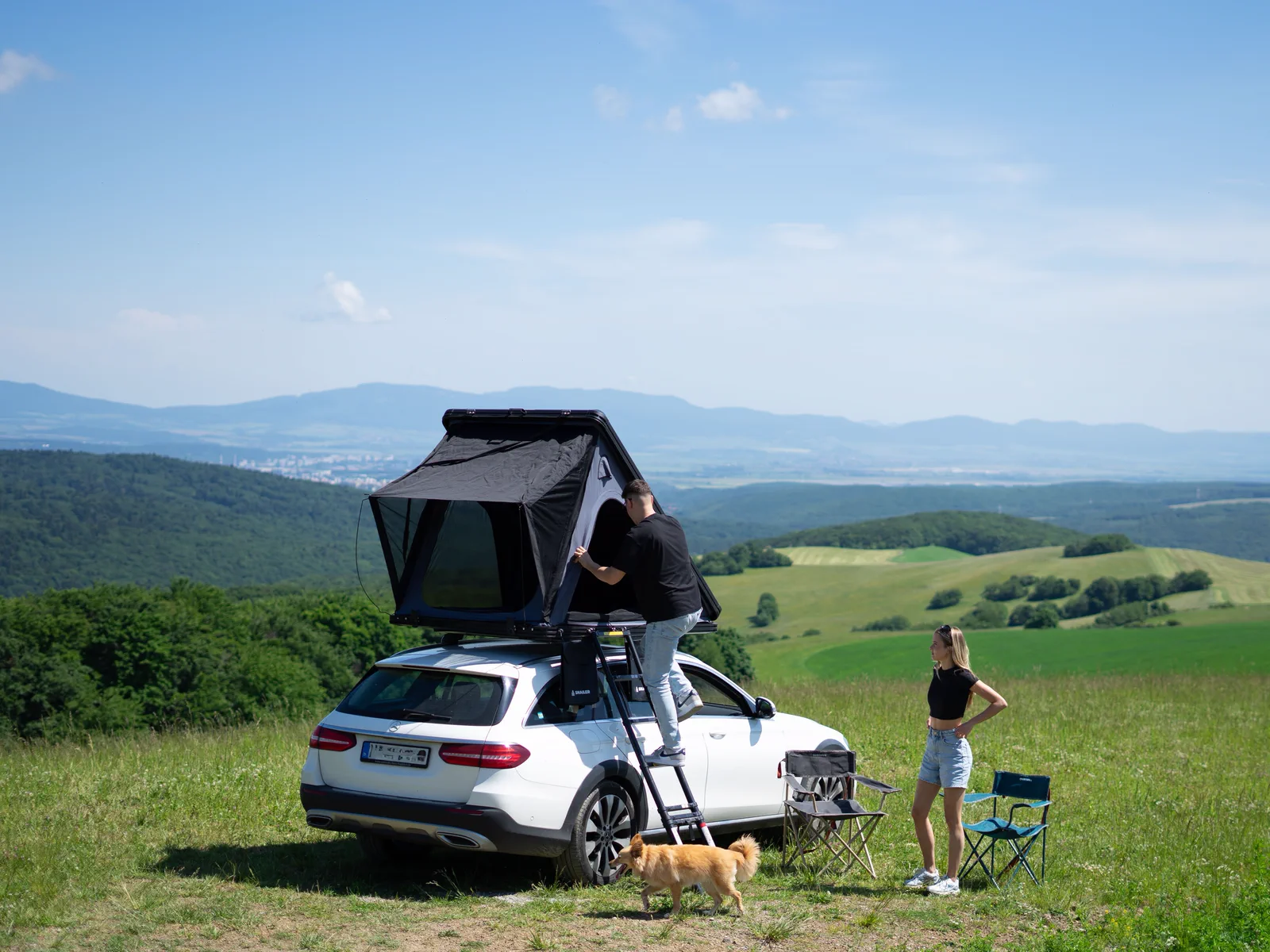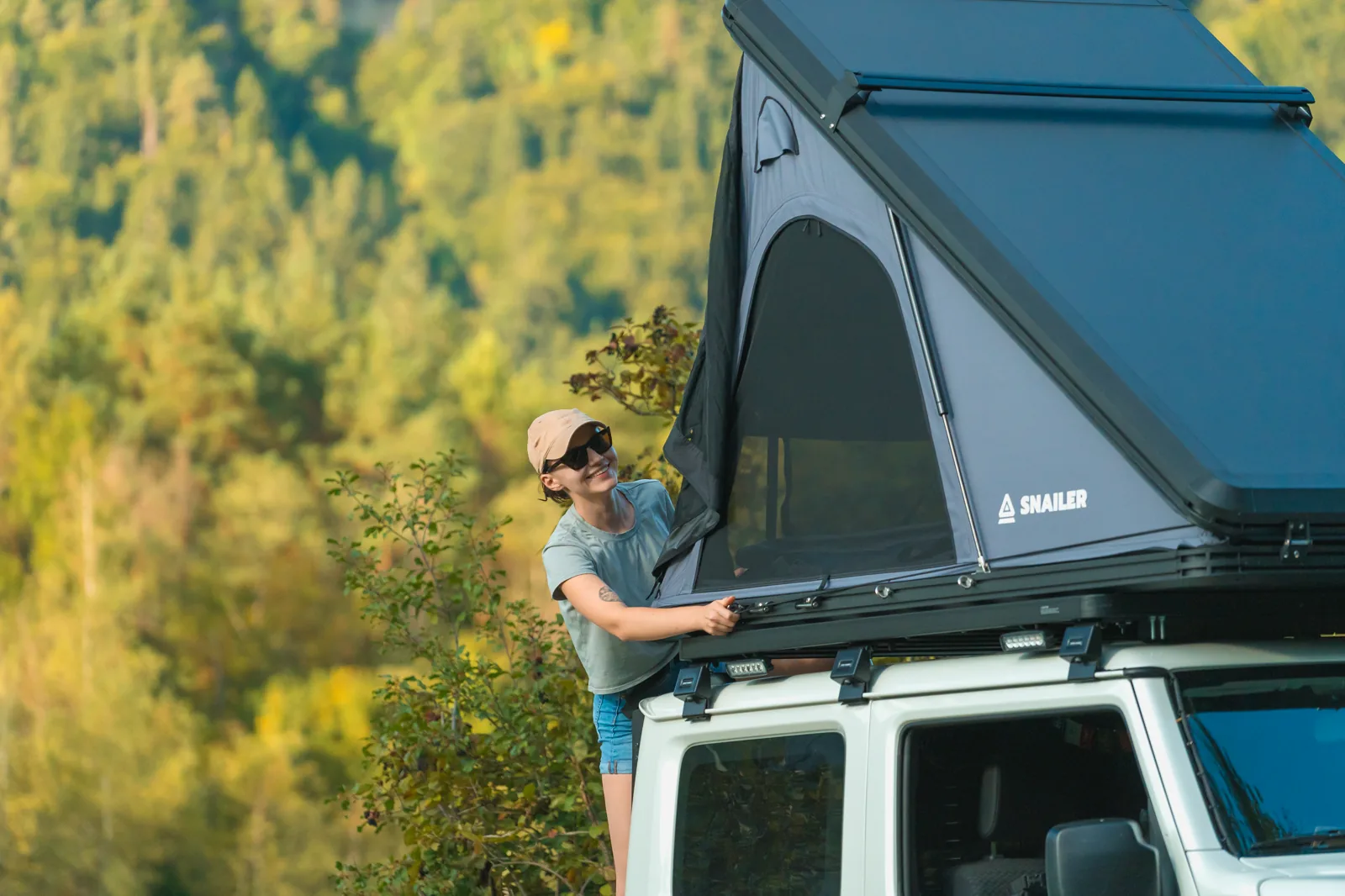

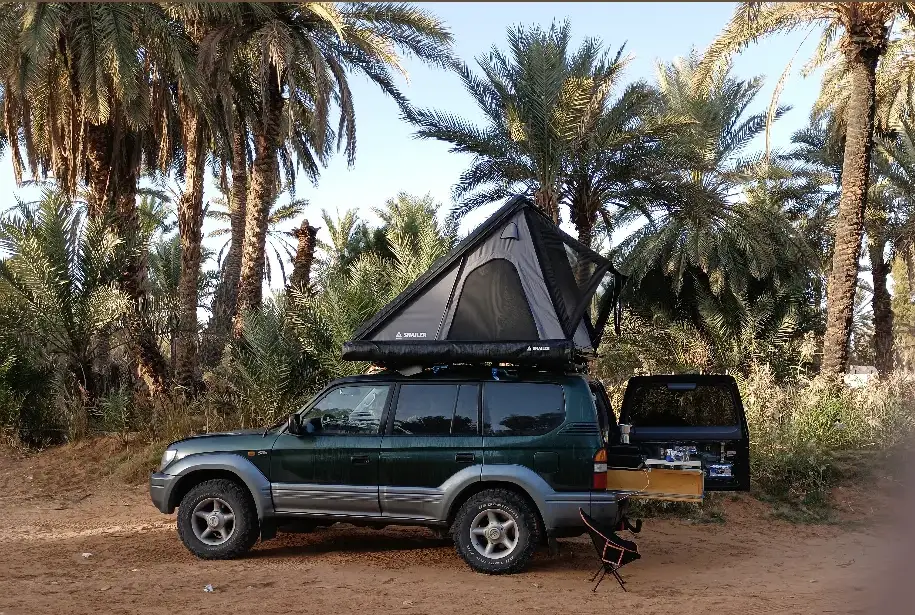
Yes, roof tents are safe when they are properly installed, used on a compatible vehicle and set up in suitable conditions. Sleeping above the ground can also help keep you away from mud, standing water and some small animals or insects.
However, sleeping above the ground does not automatically make a roof tent safe in every situation. Weather, the condition of the roof rack, the vehicle’s load capacity and even the way you park can all affect safety. Before every trip, check that the tent is securely mounted and that both your vehicle and roof rack are approved for the load.
It is also important to distinguish between the load your vehicle can carry while driving and the load it can support while parked. The tent and roof rack must remain within the vehicle’s dynamic roof-load limit while travelling. Static load capacity when parked is usually higher, but you should still follow the limits specified by the vehicle, rack and tent manufacturers.
Roof Tent Safety in Different Weather Conditions
A high-quality roof tent provides protection from changing weather, but it should not be treated as a shelter suitable for every possible condition. Rain, wind, high temperatures, snow and thunderstorms all require different precautions.
Checking the weather forecast before leaving is one of the simplest ways to avoid unsafe conditions.
Roof Tents During Thunderstorms
Light rain alone does not necessarily mean you have to end your camping trip. However, if you hear thunder, leave the roof tent and seek shelter in a substantial enclosed building or an enclosed hard-top vehicle. Do not wait for the storm to reach the campsite.
Strong wind gusts can place considerable stress on the tent fabric, hinges, poles and mounting system. Heavy rain can also make climbing the ladder more difficult and turn the ground around the vehicle slippery.
If severe thunderstorms are forecast:
- close and secure loose awnings and accessories,
- avoid exposed ridges and open elevated areas,
- keep the ladder and entrance clear,
- have a safe alternative shelter available,
- move into a substantial building or enclosed hard-top vehicle if conditions become dangerous.
A roof tent is designed for camping, not for protection during extreme weather.
Roof Tents During Lightning
You should not stay inside a roof tent during lightning.
A tent does not provide effective protection from a lightning strike. Official lightning-safety recommendations advise seeking shelter in a substantial enclosed building or a hard-top vehicle when thunder is heard. In general, it is recommended to wait at least 30 minutes after the last thunder before going back outside.
If a thunderstorm with lightning approaches while you are camping, climb down safely and shelter inside the vehicle.
Roof Tents in Heavy Rain
Most high-quality roof tents are designed to cope with normal rain, provided that the fabric, seams and rainfly are in good condition.
Before sleeping in heavy rain, check that the rainfly is properly tensioned and that the tent fabric is positioned so that water cannot get inside. Close the windows on the side facing the rain and keep your bedding away from wet tent walls.
Where you park also matters. Avoid depressions where water can collect around the vehicle. Once the weather improves, allow the tent to dry thoroughly.
Take extra care when using the ladder to get in and out, as wet rungs can become slippery. If heavy rain is accompanied by flooding, extreme winds or lightning, move to safer shelter.
Roof Tents in Extreme Heat
A roof tent can become very hot in direct sunlight, especially when there is limited airflow.
In hot weather, choose a shaded campsite whenever possible and make use of windows and ventilation panels. Opening the tent well before bedtime can also help trapped heat escape.
Do not rely on a closed roof tent as a safe place for children or pets during the day. Temperatures inside an enclosed camping space can rise quickly.
It can also help to:
- avoid setting up in exposed areas with no shade,
- use breathable bedding,
- keep enough drinking water available,
- ventilate the tent whenever conditions allow,
- move to cooler shelter if anyone shows signs of heat exhaustion.
Roof Tents in Snow
Some roof tents can also be used in cold and snowy conditions, but this depends heavily on the specific model.
Before winter camping, check the manufacturer’s recommendations regarding snow, low temperatures and maximum load limits. Snow accumulating on top of the tent adds extra weight, so remove larger build-ups regularly rather than leaving them on the tent overnight.
It is also important to check that the tent is suitable for winter use and that the ventilation openings remain sufficiently open to help reduce condensation. Your sleeping equipment should be suitable for the expected temperatures, while the ladder and entrance area should remain free of ice. The vehicle should also be parked on stable ground.
Do not use the tent during extreme snowfall, in avalanche-risk areas or in conditions that exceed the manufacturer’s recommendations.
As a general rule, the safest approach is simple: check the forecast, know the limits of your tent and have an alternative place to sleep if conditions deteriorate.
When Is It Not Safe to Sleep in a Roof Tent?
There are situations when the safest option is simply not to use the tent.
Avoid sleeping in a roof tent when:
- lightning or a severe thunderstorm is nearby,
- winds exceed the limits recommended by the manufacturer,
- the tent or roof rack is loose or damaged,
- the vehicle is parked on unstable or dangerously uneven ground,
- the total load exceeds the limits of the tent or vehicle,
- heavy snow is accumulating on the tent,
- flooding is possible,
- local authorities have closed the campsite because of weather or wildlife,
- the ladder cannot be deployed safely,
- the vehicle is parked somewhere where overnight camping is prohibited,
- any part of the mounting system appears damaged after off-road driving.
If anything about the setup does not look right, fix the problem before climbing into the tent.
Roof Tent Compatibility: Cars, Children and Pets
Weather is only one part of roof tent safety. The entire setup also needs to be suitable for the vehicle and for the people – or animals – sleeping inside.
Are Roof Tents Safe for Cars?
Yes, roof tents are safe for vehicles that are designed to support them and use a compatible roof rack.
They are not limited to large off-road vehicles. Depending on the model and roof construction, roof tents can also be fitted to SUVs, estate cars, hatchbacks and other passenger vehicles.
Before installation, check:
- the vehicle’s dynamic roof-load limit,
- the load rating of the roof rack,
- whether the rack is approved for use with roof tents,
- the weight of the tent,
- the required spacing between the roof bars,
- any restrictions relating to panoramic or glass roofs.
The lowest load rating in the entire system is the one that matters.
You should never mount a tent to roof bars simply because it physically fits. Vehicle and roof-rack manufacturers may exclude certain roofs, rails or rack systems from roof-tent use.
Remember that adding weight to the roof can also affect the way the vehicle handles. A roof tent raises the vehicle’s centre of gravity and can increase sensitivity to crosswinds, so you should adjust your speed and driving style accordingly.
Are Roof Tents Safe for Children?
Roof tents can also be suitable for families, but there is no universal minimum age that applies to every child and every tent. Parents should base the decision on the child’s mobility, ability to follow instructions and the design of the specific tent and ladder.
The biggest risk is usually not sleeping inside the tent itself, but getting in and out.
Before the first night, teach children to:
- always use the ladder rather than climbing on the vehicle,
- face the ladder when climbing up or down,
- keep both hands free while climbing,
- never jump from the tent,
- avoid playing near the entrance,
- wake an adult if they need to leave the tent during the night.
Younger children should always be supervised when using the ladder.
Inside the tent, keep the sleeping area clear and follow the manufacturer’s maximum occupancy and weight limits. If the tent has openings close to the edge of the sleeping platform, make sure children know how to use them safely.
Tip for larger families: If you travel with children and need more space, take a look at the SNAILER Abis MAX roof tent. It is designed for family camping and offers sleeping space for 3 to 4 people.
Are Roof Tents Safe for Pets?
Dogs and some cats can sleep comfortably in a roof tent, but access is usually the biggest challenge.
A small dog may be easy to carry, while repeatedly lifting a large dog up a ladder can be unsafe for both the animal and the owner. Standard roof-tent ladders are generally designed for people rather than animals.
Depending on your pet, useful additions may include:
- a purpose-built pet ramp,
- a lifting harness,
- a protective blanket or mattress cover,
- a secure lead for entering and leaving the tent,
- an additional sleeping mat.
Never force an animal to climb a steep ladder.
Where appropriate, keep your pet’s claws trimmed to reduce the risk of damaging the mesh or tent fabric. In warm weather, make sure pets have sufficient ventilation and access to water.
Are Roof Tents Safe From Bears?
A roof tent may keep you above the ground, but it should not be considered bear-proof.
The fabric walls of a roof tent do not form a protective barrier against a determined bear. Bears can also climb, and the height of the tent should never be your main safety strategy.
In bear country, proper campsite management matters much more than whether you sleep on the ground or on top of your vehicle.
Never store food, rubbish or strongly scented items inside the roof tent. This also includes things you may not immediately think of as food, such as:
- toothpaste,
- cosmetics,
- pet food,
- cooking equipment with food residue,
- rubbish and wrappers.
National park guidance in areas with bears repeatedly advises campers not to store food and other scented items inside tents. Use the storage method required at the specific location, such as bear lockers or approved bear-resistant containers.
Which Places Should You Avoid to Reduce the Risk of Encountering a Bear?
When travelling in regions where bears naturally occur, including parts of the United States, Canada, Europe and Asia, additional safety precautions are necessary.
In bear country, avoid:
- camping directly beside obvious animal trails,
- areas with fresh tracks or bear droppings,
- locations near animal carcasses,
- places with discarded food or overflowing rubbish bins,
- campsites where recent bear activity has officially been reported,
- placing your sleeping area immediately next to food-storage or cooking areas.
At managed campsites, always check the latest local guidance. Rules can vary considerably between parks. Some locations require food lockers, while others require approved bear-resistant containers.
For example, Yosemite National Park has an established population of American black bears and requires visitors to follow strict food-storage rules. Food and scented items must not be stored in tents or other soft-sided camping shelters.
The safest approach is therefore not to look for a supposedly “bear-free corner” of a campsite, but to check local wildlife notices and follow the rules of the specific park or campground.
How to Avoid Encountering a Bear While Camping
When camping in areas with bears:
- Check local regulations before your trip. Food-storage requirements vary by location.
- Never keep food inside your roof tent.
- Store rubbish just as securely as food.
- Treat toiletries and pet food as scented items too.
- Clean cooking equipment immediately after use.
- Never deliberately feed bears or other wildlife.
- Keep your campsite clean and remove food scraps.
- Do not leave coolers or food unattended.
- Keep a safe distance if you see a bear.
- Follow local instructions for bear encounters, as advice can differ depending on the species and region.
A roof tent may reduce contact with some smaller wildlife, but good campsite habits are what reduce the risk of attracting bears.
How to Make Roof Tent Camping Safer: Practical Tips

A few simple checks before every night can make roof-tent camping significantly safer.
- Check your vehicle and roof-rack compatibility.
Never assume that a roof tent is suitable simply because you can physically attach it. - Respect all weight limits.
Check both the vehicle and roof-rack specifications and follow the lowest permitted load. - Inspect the mounting system regularly.
Look for loose hardware, movement, damage or unusual noises, especially after driving on rough roads. - Park on firm, level ground.
A stable vehicle creates a more stable sleeping platform. - Set up the ladder correctly.
Follow the manufacturer’s instructions regarding its angle and length. - Check the weather forecast.
Do not wait until severe weather reaches the campsite before deciding where you will shelter. - Keep the entrance clear.
Shoes, bags and camping equipment around the ladder create unnecessary trip hazards at night. - Use lighting after dark.
A headlamp or camping light makes climbing down safer. - Keep food out of the tent in wildlife areas.
Follow local food-storage regulations rather than relying on the height of the tent. - Dry and inspect the tent after your trip.
Moisture can encourage mould, while regular inspection helps you spot damage before your next journey.
With the right vehicle, secure installation and sensible camping habits, a roof tent can be a safe and comfortable way to sleep while travelling.
Ready for Your Next Adventure?
Choosing a roof tent that suits your vehicle, travel style and number of campers is the first step towards safer camping.